New Hole Radar!
Friday, July 15th, 2022 11:08 pm![[personal profile]](https://www.dreamwidth.org/img/silk/identity/user.png) snoozefestaudio
snoozefestaudioNew radar evidence of Percy Jones' Hole today. This is the first storm since July 6th, the radar images of which inspired the Sky Beam Hypothesis, Two days later.
I was careful today, to screencap every radar frame, all at the same zoom. And I upped my game by installing an animated GIF app on my PC!
Let's take a look at today's new, hole evidence!
As always, keep your focus on the BLUE DOT at the center of the map! That's the center of Aurora!
These are eleven sequential radar images over the hour-long course of the storm. The first GIF is slower, the second, super fast, and the third is backward...
SLOW VERSION
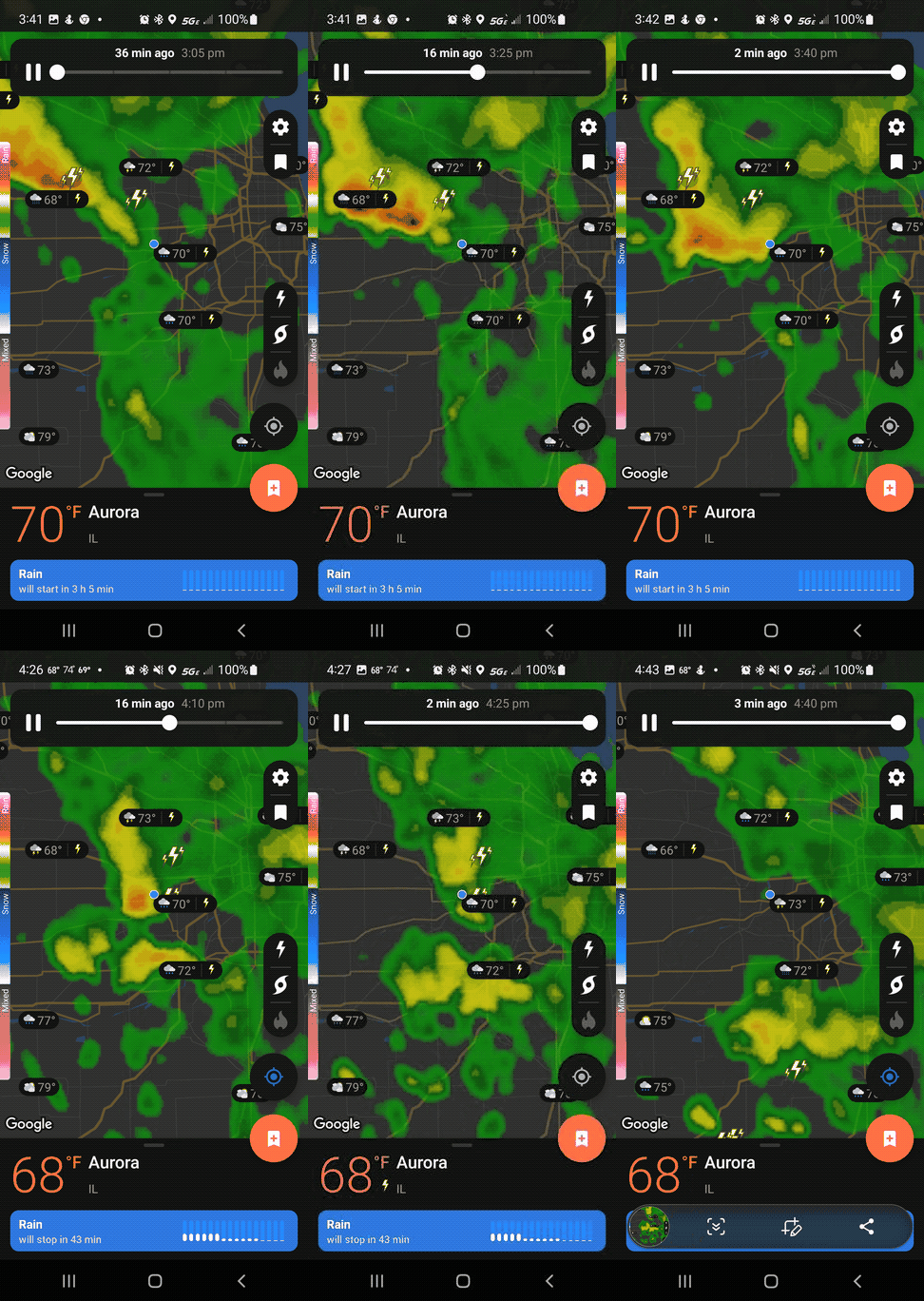
As you can see, a very active system with a large yellow and red core is bearing down on Aurora from the northwest. It is heading straight for town. But as it attempts to pass over, three things happen...
1) The yellow band has to fight to get over the blue dot (center of town).
2) As the Yellow band fights, the red core, which can't get over town, shrinks and breaks up.
3) As both the above are happening, a hole of zero precipitation forms to the southeast of town, expanding in the same direction as the storm is trying to move.
You can also see lightning strikes getting registered around the northwest edge of town, just as the storm system starts to weaken, and the hole opens to the southwest.
In frames 7 and 8, you see the hole completely surrounded. But in frames 9 and 10, it busts open the western edge of the system, and by frame 11, has completely prevailed. The red and yellow core has been completely defeated, and the whole area around town is back to zero precipitation.
Now let's look at the fast version to see, possible evidence of the Sky Beam phenomenon in action.
------------{=0=}------------
FAST VERSION
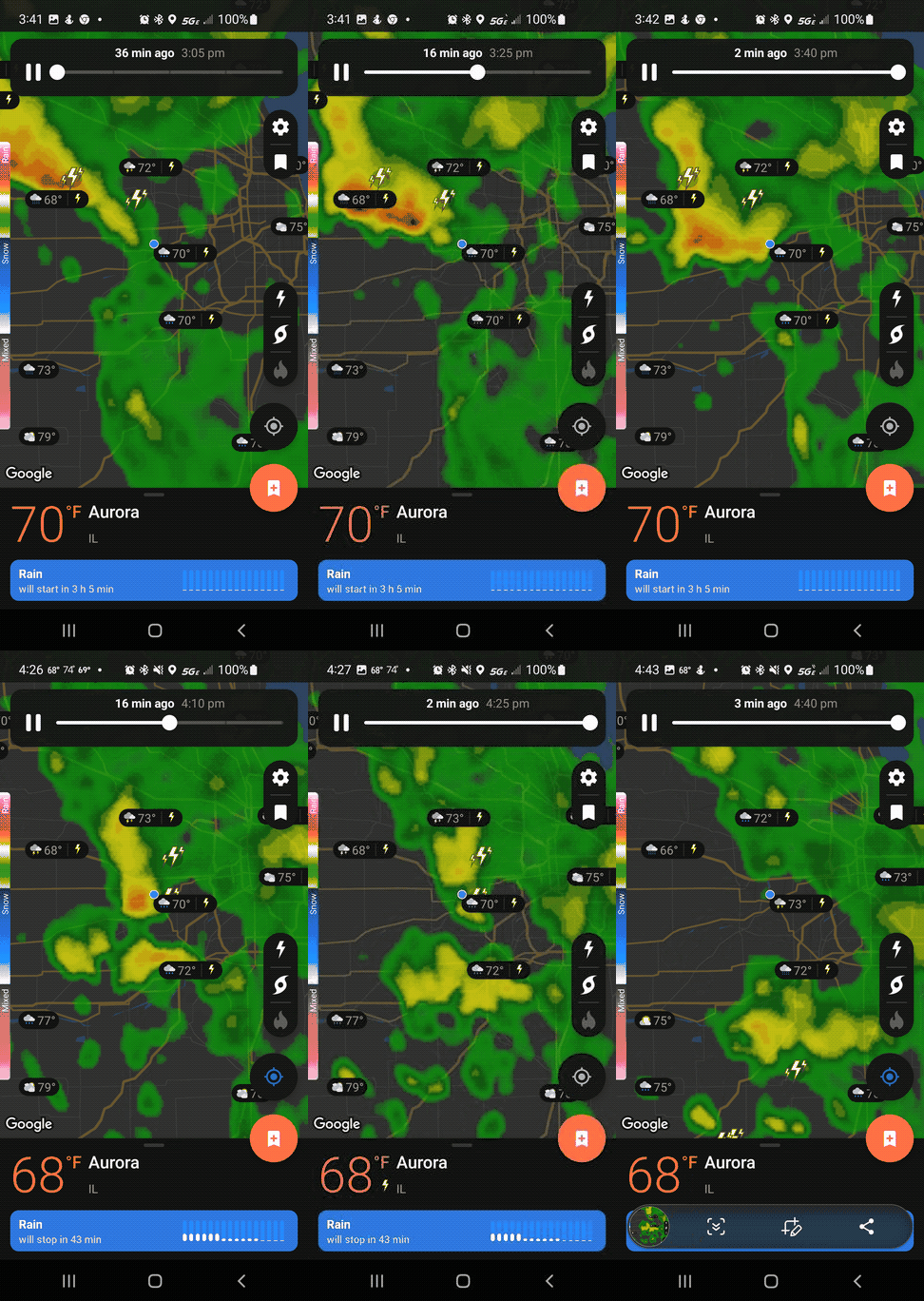
Focus on the lightning bolt icons around the blue dot, here in the fast version.
The red and yellow core is enormous heading toward town, but then it discharges too close to that blue dot, and immediately vanishes!.. with the empty hole in it's wake.
You can also see the contours of the hole better in the fast version.
This supports the idea that the coil... the 40-thousand tons of iron filings buried under the round house in a giant ring shape... is electrically neutral until lightning discharge induces a current into it.
And I'll get more into the mechanics of that below, but first, I was just curioius to see it in reverse...
------------{=0=}------------
BACKWARD
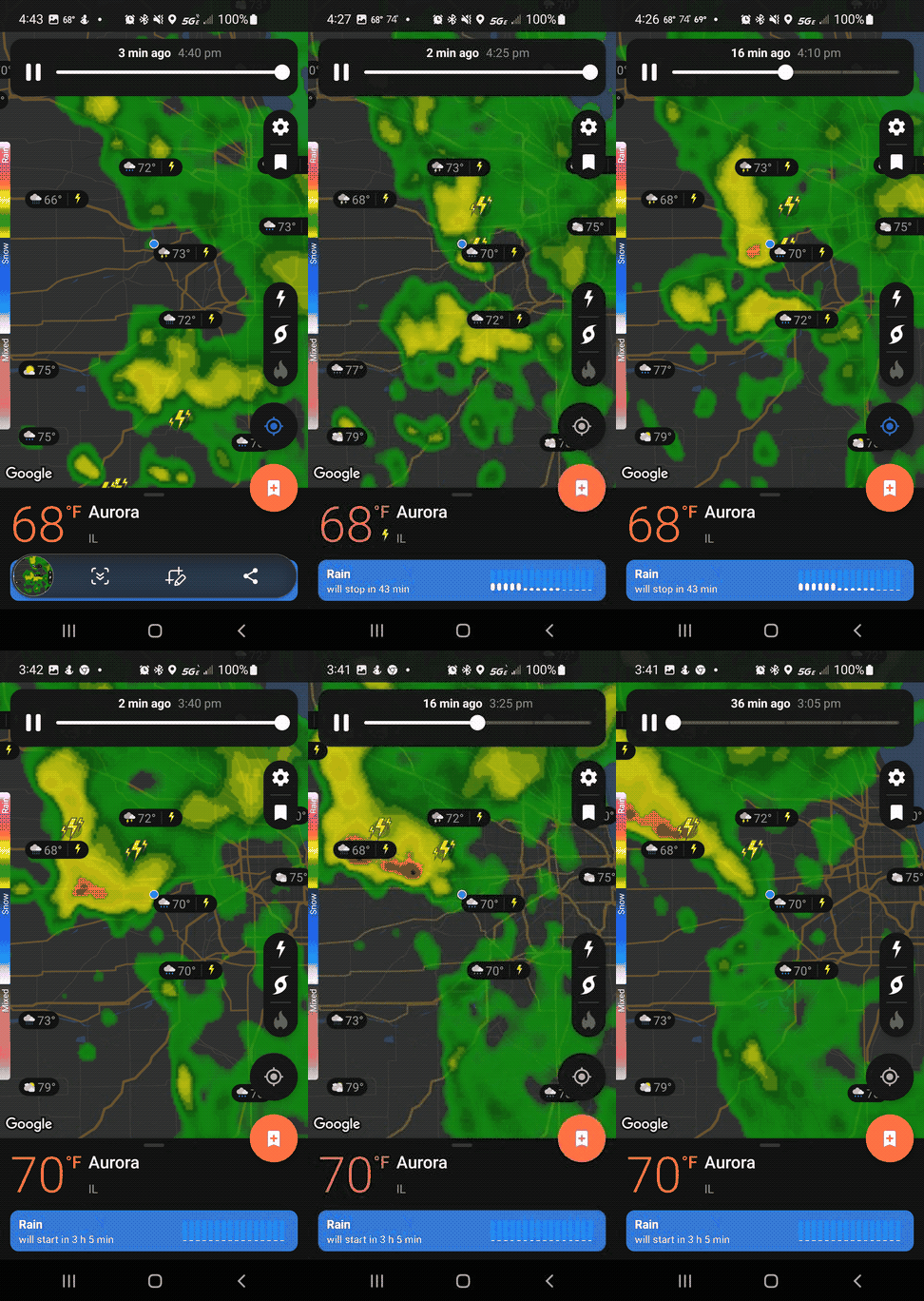
In the reverse, it's the hole closing in on town from the southest, heading northwest. As it converges on the blue dot, lighting discharges near town, and then the blue dot appears to blast out a huge wave of yellow and red, like a flamethrower, to the northwest.
All the laws of physics work perfectly fine in reverse, on paper. So this could be significant... but only if this reverse flamethrower effect happens a lot.
Otherwise, it's just a cool coincidence of this one storm.
Okay... on to the mechanics of the sky beam again!..
------------{=0=}------------
Now that I've got a second set of radar images from a second storm, showing evidence for the hole... and the skybeam hypothesis... we need to take a closer look at the ionosphere.
The ionosphere is created by ultraviolet rays from the Sun, which strip electrons off atoms high up in the atmosphere.
It is another case of static electricity... if you think of the outer atmosphere as being the surface of a balloon... that balloon's getting rubbed against the Sun's hair.
But the strength of that charge in the ionosphere peaks and dips according to sunspot activity! The more the sunspot activity, the stronger the charge. The less the sunspot activity, the weaker the charge.
The surface of the ground is electrically negative, compared to the ionosphere, but the stronger that charge in the ionosphere, the greater the, potential difference between it and the ground.
And according to Space.Com we just began a new sunspot cycle a couple years ago!
This could explain why in 2018 and 2019, I was able to catch one good thunderstorm per year... but in 2020, I had to wait until October, and in 2021, I got nothing at all!
By 2021, the sunspot cycle, which has been stronger than predicted, according the the article linked above, was well underway... meaning the ionosphere was more strongly charged!.. and is even MORE strongly charged, here in 2022!
--<>--
This would magnify the sky beam effect at the round house, if the sky beam hypothesis were true!
For this to work, the electromagnetic field lines induced around the ring... that ferris ring beneath the round house... would have to oppose the electromagnetic field lines of the storm system.
But if those induced field lines around the ring did oppose the storm... then they would repel raindrops in direct proportion to the strength of their static charge.
So green band, with the least charge, gets through easiest. But yellow band, with a stronger charge, has a hard time of it, and red band, with the strongest charge, just induces too much repulsion!
As the induced field lines around the ring clear the airspace above it of all water droplets, it opens a hole in the storm.
The positively charged ionosphere sees not only a path to ground... but one that looks more negative than the top of the storm, so a channel of electrical flux gets established at that spot.
This ionospheric flux not only helps the ring repel the raindrops, but also to inonize the air passing over the spot, which then creates a huge rainshadow emanating from the ring, in the direction of the wind, that expands like a bubble, allowing more flux with the ionosphere.... in a feedback loop!
The hole just keeps getting bigger, and dryer, and more ionized, until the storm is neutralized... at which point the current induced in the ring dies away.
The feedback loop decays, and everything goes back to normal.
------------{=0=}------------
I kinda said most of that in the first sky beam entry, but now we've got more radar evidence.
And increasing sunspot activity could explain why Percy Jone's Hole is a bigger problem in some years or decades, and much less of a problem in others.
--<>--
As I said in the original entry on this phenomenon, I saw it happening in the late 1990s, and the early 2000s when I worked with Percy.
But I do remember earlier in the 1990s, specifically 1992 and 1993, we had massive storms pass over town, with huge blasts of thunder all over the place.
And I also remember a spell in the early 2010s where that was the case.
I guess I'll have to look back and see when the sunspots were doing what.
------------{=0=}------------
But as with any scientific hypothesis... if it's right, it should be able to make predictions that come true.
So, if this one is right, then it should continue to get harder and harder for me to record thunder for the next three years, and it won't be easy again for about six or seven more years!
However, over the next three years, I should be able to capture mountains of radar evidence with very clear holes in every storm over Aurora... getting larger and more pronounced until 2025 or 2026.
If not... we'll know the hypothesis is wrong and needs revision.
°¦}
https://soundcloud.com/snoozefestaudio
I was careful today, to screencap every radar frame, all at the same zoom. And I upped my game by installing an animated GIF app on my PC!
Let's take a look at today's new, hole evidence!
As always, keep your focus on the BLUE DOT at the center of the map! That's the center of Aurora!
These are eleven sequential radar images over the hour-long course of the storm. The first GIF is slower, the second, super fast, and the third is backward...
As you can see, a very active system with a large yellow and red core is bearing down on Aurora from the northwest. It is heading straight for town. But as it attempts to pass over, three things happen...
1) The yellow band has to fight to get over the blue dot (center of town).
2) As the Yellow band fights, the red core, which can't get over town, shrinks and breaks up.
3) As both the above are happening, a hole of zero precipitation forms to the southeast of town, expanding in the same direction as the storm is trying to move.
You can also see lightning strikes getting registered around the northwest edge of town, just as the storm system starts to weaken, and the hole opens to the southwest.
In frames 7 and 8, you see the hole completely surrounded. But in frames 9 and 10, it busts open the western edge of the system, and by frame 11, has completely prevailed. The red and yellow core has been completely defeated, and the whole area around town is back to zero precipitation.
Now let's look at the fast version to see, possible evidence of the Sky Beam phenomenon in action.
Focus on the lightning bolt icons around the blue dot, here in the fast version.
The red and yellow core is enormous heading toward town, but then it discharges too close to that blue dot, and immediately vanishes!.. with the empty hole in it's wake.
You can also see the contours of the hole better in the fast version.
This supports the idea that the coil... the 40-thousand tons of iron filings buried under the round house in a giant ring shape... is electrically neutral until lightning discharge induces a current into it.
And I'll get more into the mechanics of that below, but first, I was just curioius to see it in reverse...
In the reverse, it's the hole closing in on town from the southest, heading northwest. As it converges on the blue dot, lighting discharges near town, and then the blue dot appears to blast out a huge wave of yellow and red, like a flamethrower, to the northwest.
All the laws of physics work perfectly fine in reverse, on paper. So this could be significant... but only if this reverse flamethrower effect happens a lot.
Otherwise, it's just a cool coincidence of this one storm.
Okay... on to the mechanics of the sky beam again!..
Now that I've got a second set of radar images from a second storm, showing evidence for the hole... and the skybeam hypothesis... we need to take a closer look at the ionosphere.
The ionosphere is created by ultraviolet rays from the Sun, which strip electrons off atoms high up in the atmosphere.
It is another case of static electricity... if you think of the outer atmosphere as being the surface of a balloon... that balloon's getting rubbed against the Sun's hair.
But the strength of that charge in the ionosphere peaks and dips according to sunspot activity! The more the sunspot activity, the stronger the charge. The less the sunspot activity, the weaker the charge.
The surface of the ground is electrically negative, compared to the ionosphere, but the stronger that charge in the ionosphere, the greater the, potential difference between it and the ground.
And according to Space.Com we just began a new sunspot cycle a couple years ago!
This could explain why in 2018 and 2019, I was able to catch one good thunderstorm per year... but in 2020, I had to wait until October, and in 2021, I got nothing at all!
By 2021, the sunspot cycle, which has been stronger than predicted, according the the article linked above, was well underway... meaning the ionosphere was more strongly charged!.. and is even MORE strongly charged, here in 2022!
This would magnify the sky beam effect at the round house, if the sky beam hypothesis were true!
For this to work, the electromagnetic field lines induced around the ring... that ferris ring beneath the round house... would have to oppose the electromagnetic field lines of the storm system.
But if those induced field lines around the ring did oppose the storm... then they would repel raindrops in direct proportion to the strength of their static charge.
So green band, with the least charge, gets through easiest. But yellow band, with a stronger charge, has a hard time of it, and red band, with the strongest charge, just induces too much repulsion!
As the induced field lines around the ring clear the airspace above it of all water droplets, it opens a hole in the storm.
The positively charged ionosphere sees not only a path to ground... but one that looks more negative than the top of the storm, so a channel of electrical flux gets established at that spot.
This ionospheric flux not only helps the ring repel the raindrops, but also to inonize the air passing over the spot, which then creates a huge rainshadow emanating from the ring, in the direction of the wind, that expands like a bubble, allowing more flux with the ionosphere.... in a feedback loop!
The hole just keeps getting bigger, and dryer, and more ionized, until the storm is neutralized... at which point the current induced in the ring dies away.
The feedback loop decays, and everything goes back to normal.
I kinda said most of that in the first sky beam entry, but now we've got more radar evidence.
And increasing sunspot activity could explain why Percy Jone's Hole is a bigger problem in some years or decades, and much less of a problem in others.
As I said in the original entry on this phenomenon, I saw it happening in the late 1990s, and the early 2000s when I worked with Percy.
But I do remember earlier in the 1990s, specifically 1992 and 1993, we had massive storms pass over town, with huge blasts of thunder all over the place.
And I also remember a spell in the early 2010s where that was the case.
I guess I'll have to look back and see when the sunspots were doing what.
But as with any scientific hypothesis... if it's right, it should be able to make predictions that come true.
So, if this one is right, then it should continue to get harder and harder for me to record thunder for the next three years, and it won't be easy again for about six or seven more years!
However, over the next three years, I should be able to capture mountains of radar evidence with very clear holes in every storm over Aurora... getting larger and more pronounced until 2025 or 2026.
If not... we'll know the hypothesis is wrong and needs revision.
°¦}


